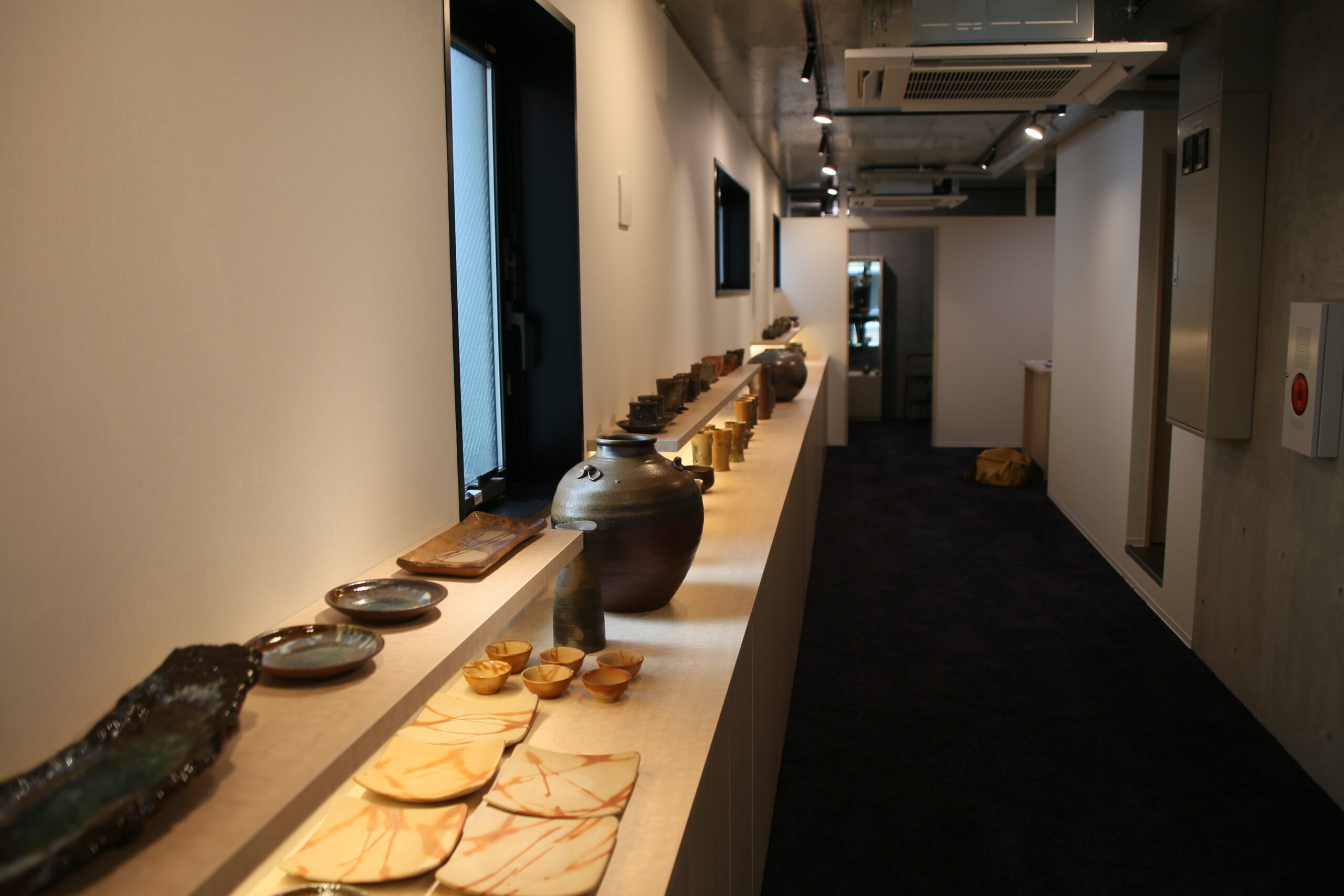
KENTA TAKAKI
Artwork Exhibition and Sale
~Profile~
Resides in Koshi City, Kumamoto Prefecture
Born in Kumamoto Prefecture in 1986
Graduated from Fukuoka Design College in 2007
Major: Furniture and Product Design
Commenced apprenticeship at Kumamoto Amakusa Maruo-yaki the same year
Established kiln in Koshi City in 2016
Trained for six years at kilns in Amakusa, the heartland of Amakusa stoneware
During this time, he became particularly drawn to the allure of “white porcelain,” a type of Amakusa stoneware known for its exceptionally high purity.
Its defining characteristics are the clay’s “whiteness” and “fine texture.”
After establishing his own kiln, he began creating works that accentuate these features,
communicating the inherent charm of Amakusa stoneware.
~Awards~
2008 Amakusa Grand Ceramics Exhibition: Ceramics Island AMAKUSA Ceramics Exhibition
[Hatsubachi] Runner-up Grand Prize
2009 Amakusa Grand Ceramics Exhibition: Ceramics Island AMAKUSA Ceramics Exhibition
[Mamefuri] [Kamisara] 2009 Double Grand Prize
2010 Amakusa Grand Ceramics Exhibition: Ceramic Island AMAKUSA Ceramics Exhibition
[Kiriishi] Jury Prize: Ryōji Koiue Award
2017 ART FAIR ASIA FUKUOKA (AFAF) AWARD
[Mold] 6 Gallery Awards and Audience Award

What is Amakusa Pottery Stone?
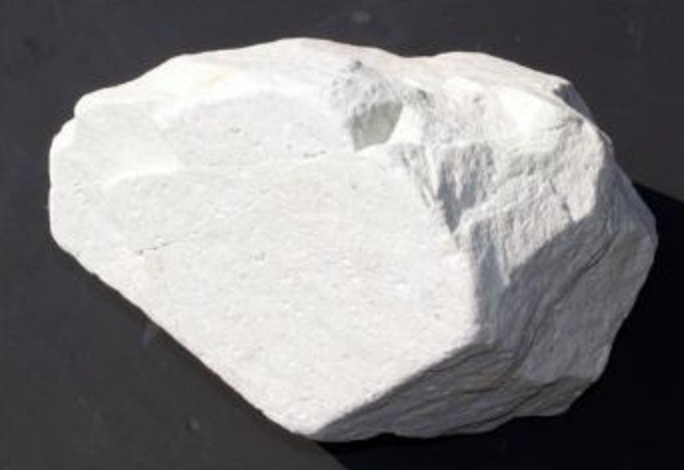
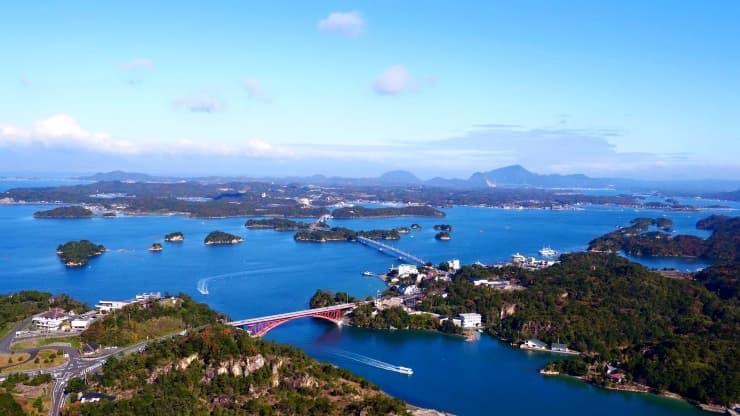
Amakusa clay is a clay mineral mined on Amakusa Shimojima Island in Kumamoto Prefecture.
Typically, minerals (clay) used in ceramics are manufactured by blending minerals from various sources with different compositions. However, Amakusa
Amakusa Clay is the only clay that stands alone as a single mineral, renowned as the world’s finest. Even the brilliant Hiragane Gen’nai, a representative figure of the Edo period, praised it highly, stating, “Pottery clay, this clay is truly ‘unmatched under heaven’ in its superior quality.”
Amakusa clay has long been widely used as a raw material for ceramics, accounting for 80% of Japan’s clay production. It serves as the primary ingredient for Yatsushiro ware, Kiyomizu ware, Hasami ware, and Setouchi ware.
The annual output of this Amakusa stoneware is declining year by year. This is not only due to diminishing resource reserves but also because the stoneware itself circulates at excessively low prices, forcing many stoneware production and processing businesses to close.
Now, the world’s finest stoneware, Amakusa stoneware, demands rebranding.
Characteristics of Amakusa Pottery Stone
1. Fine texture 2. Whiteness 3. High purity 4. High plasticity 5. High heat resistance
Work
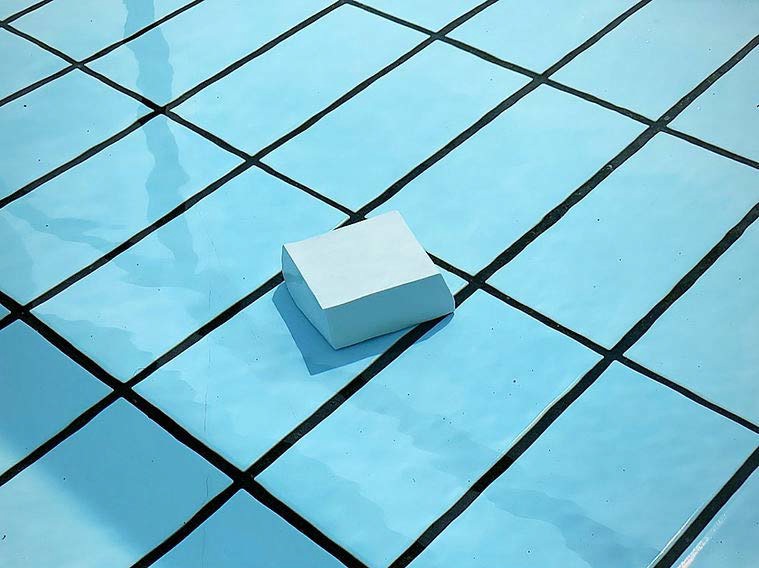
White Ceramic “Bean Curd”
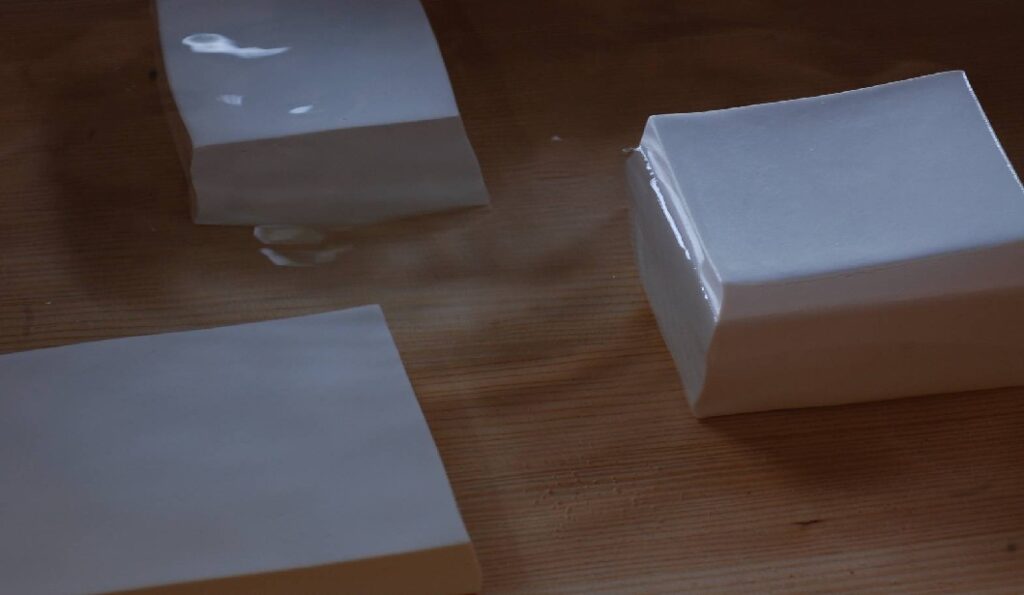
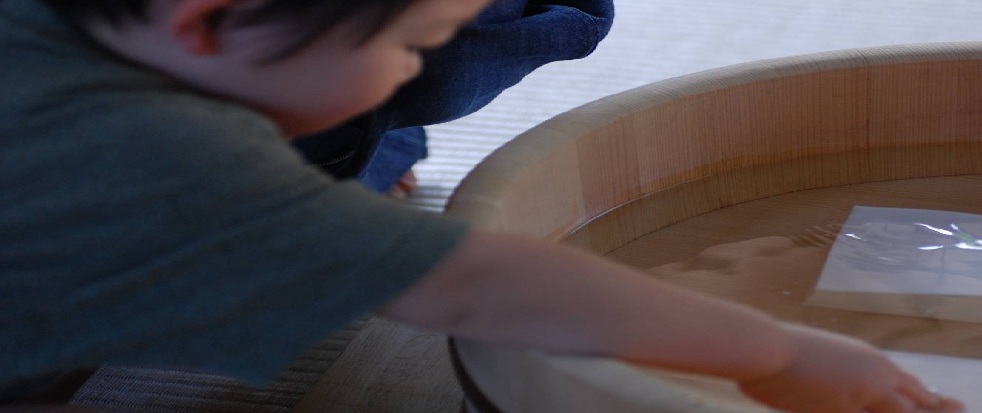
The fresh, tender texture of “tofu” is expressed through the hard-fired porcelain clay.
The pure “white” and the wavy edges, filtered through water, blur the distinction between ‘softness’ and actual “hardness,” creating an optical illusion for the viewer.
The smooth texture and delicate lines of Amakusa porcelain, its mother material, seem to best express the characteristics of Japanese “tofu” by portraying it.
Sekimori tofu
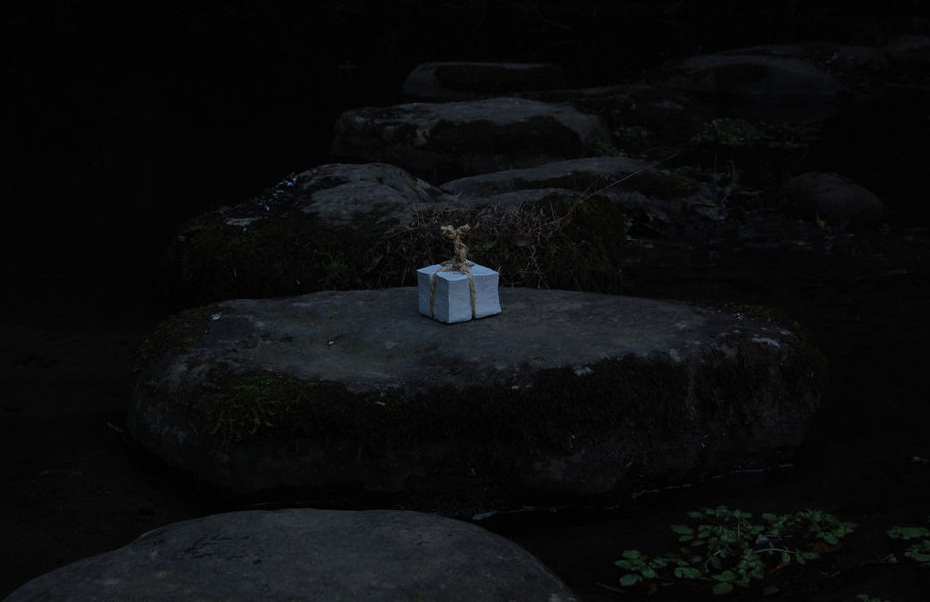
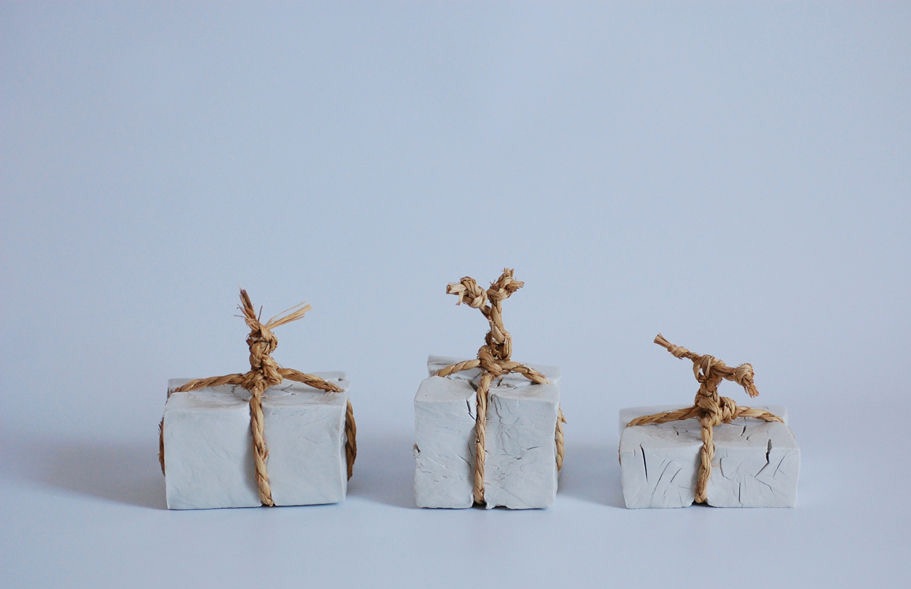
A work combining the “gatekeeper stone” used in tea rooms and shrines/temples with “hardened bean paste.”
Since bean paste was once hard, it was tied with straw rope for transport.
This practice seemed strikingly similar to the placement of “gatekeeper stones” meant to prohibit entry.
Whether it actually functions as a gatekeeper cannot be guaranteed.
Nail-pierced tofu
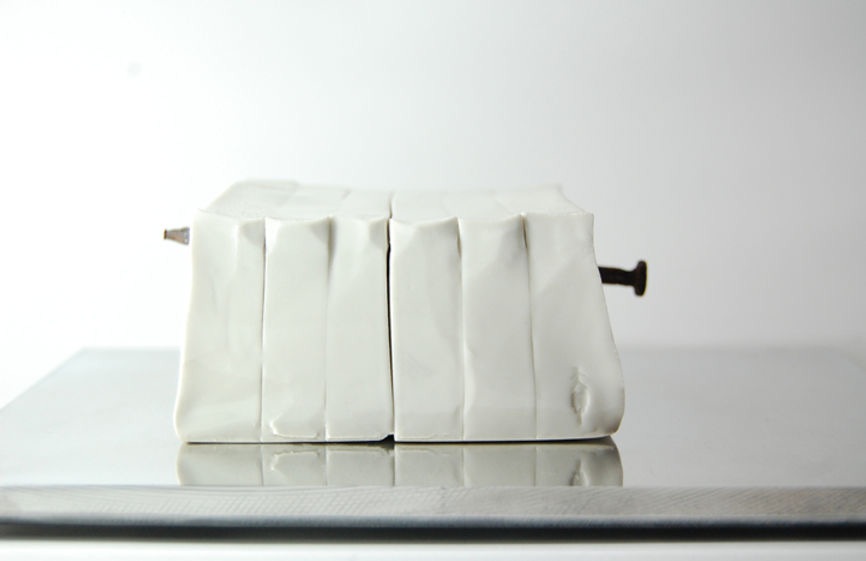
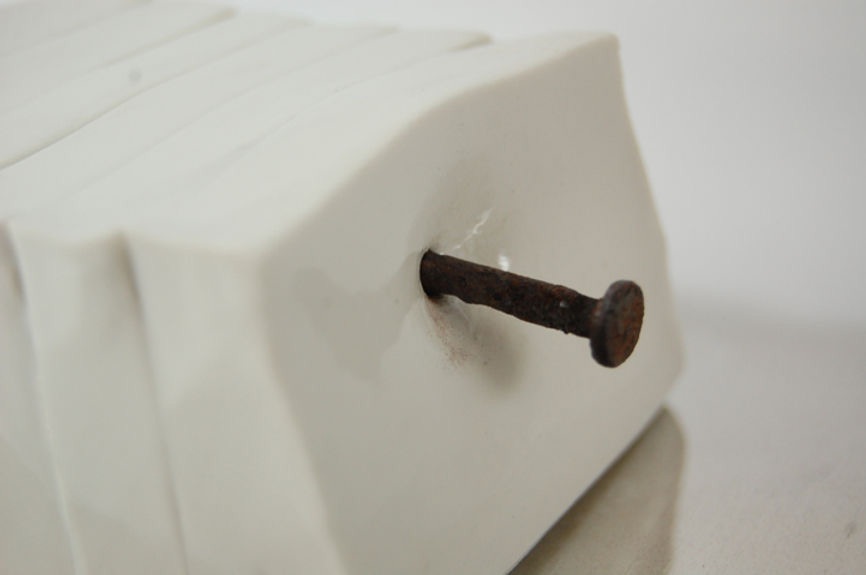
I drove a nail through a bean curd block as a good luck charm. In Japan, there is a custom called “Needle Memorial Service,” where unused embroidery needles are stuck into bean curd blocks as a gesture of gratitude for their service.
Following this tradition, I drove a nail through it, also as a gesture of appreciation for the role it played.
Nail Tofu
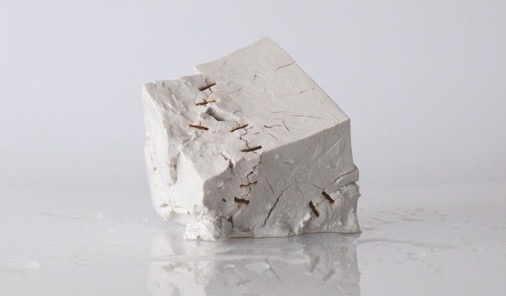
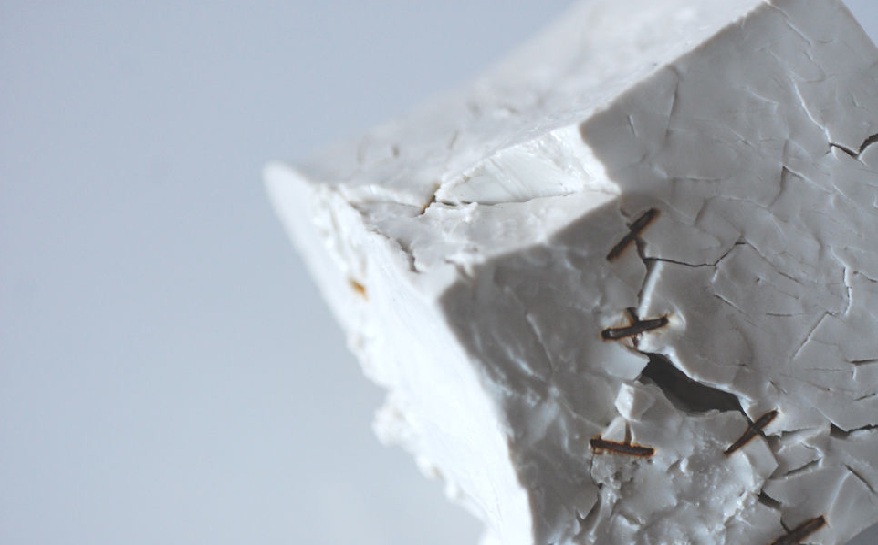
The white porcelain bowl features the repair technique “kugi-tsugi,” depicting how the crumbling bowl is held together with nails. There is a saying: “Nails in a bowl.”
This unique idiom leverages the shared perception of a bean pod as fragile and delicate, often used as a cutting metaphor for something reckless or futile. By embodying this, it signifies that the intended outcome can be achieved—essentially, skin for skin.
The iron used for the rivets rusts over time. The aim is for the contrast with the white porcelain to become pronounced, serving as a “seasoning” that accentuates the porcelain’s whiteness.
Kami-sara
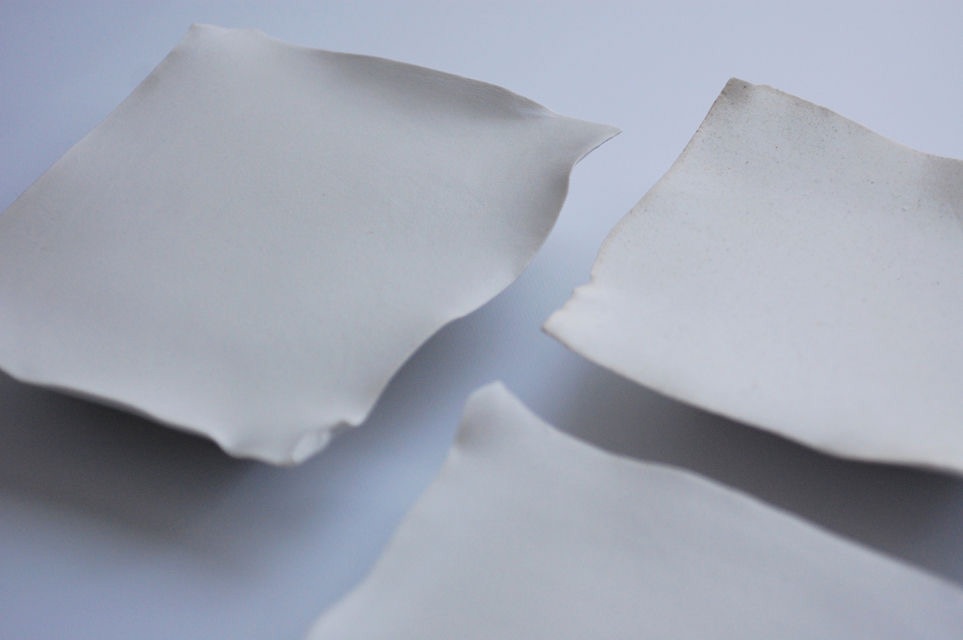
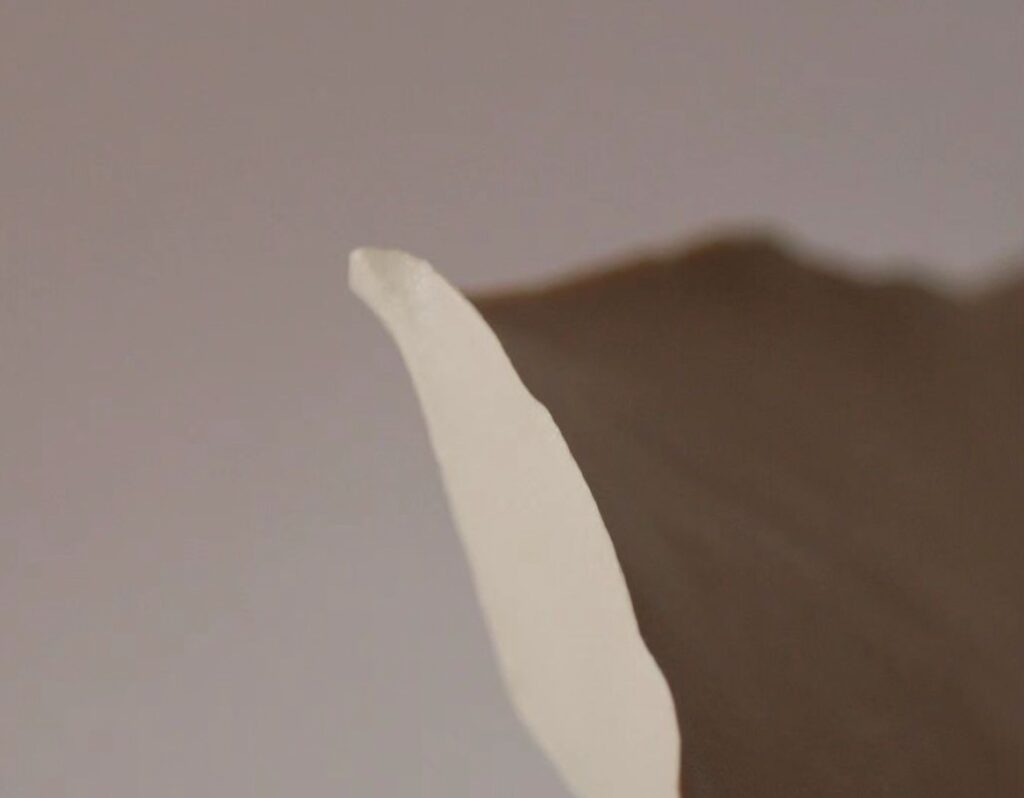
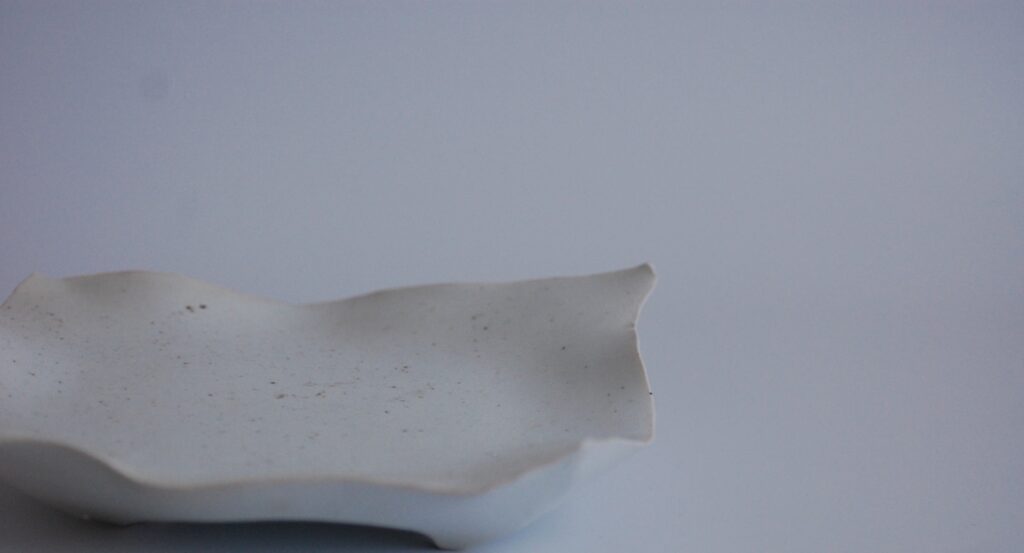
A vessel as light as a floating sheet of paper.
It embodies the whiteness, lightness, and fluttering quality of paper, aiming to be a vessel that serves as a “blank canvas” to highlight the food it holds.
TOFUs e a r r i n g
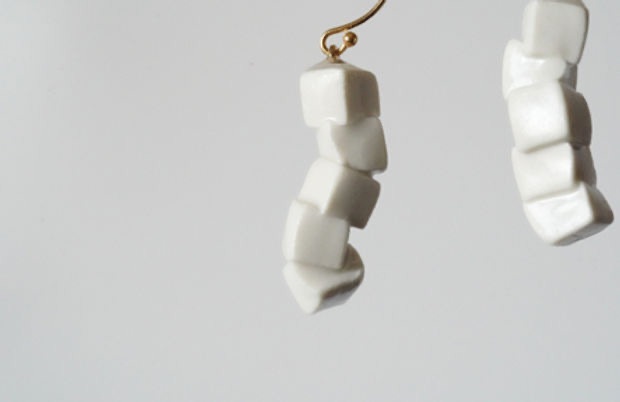
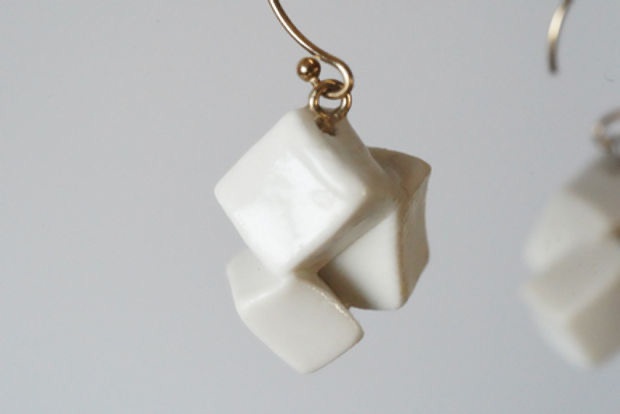
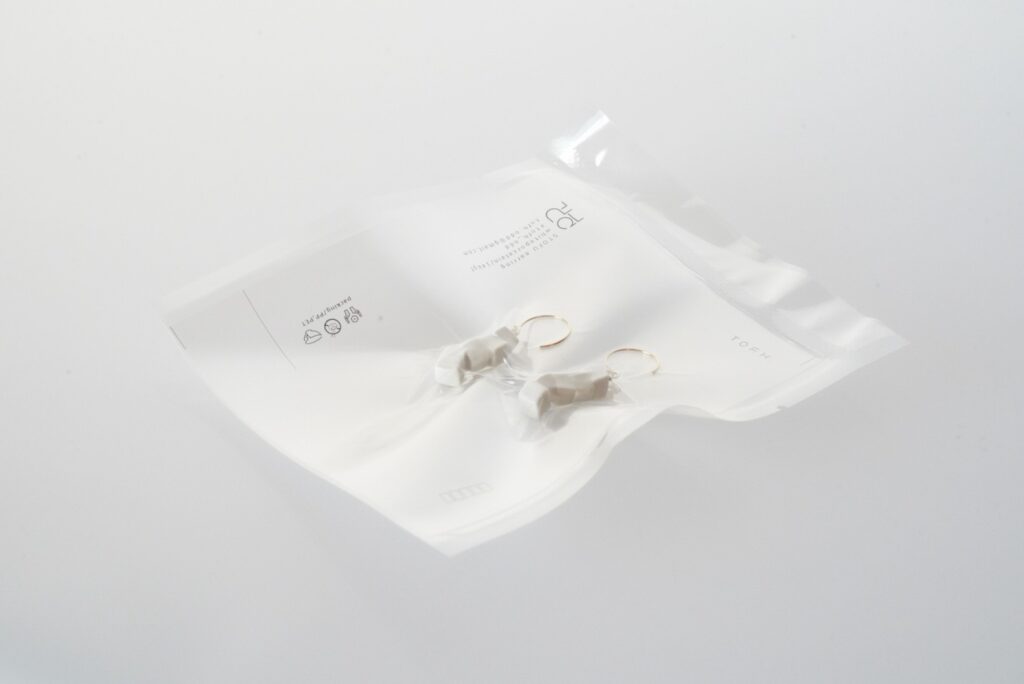
White porcelain earrings featuring a bean curd motif.
Tiny bean curds push against each other, shifting shape as they connect in a chain.
The packaging adopts vacuum-sealed packaging, echoing the motif.
Bean-shaped chopstick rest
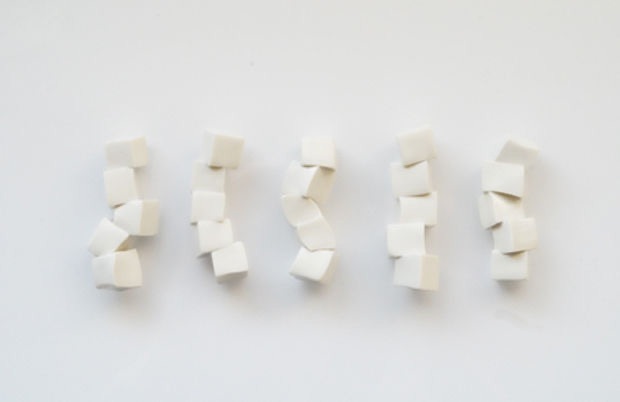
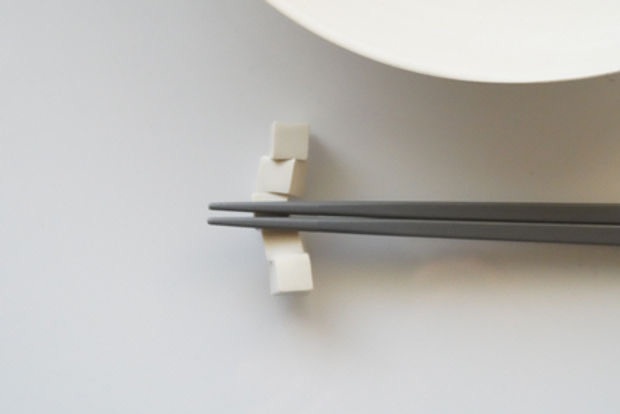
White porcelain chopstick rests featuring a tofu motif.
Small pieces of tofu push against each other, changing shape as they connect in a chain.