February 2026: First Art, First Life
FlyD
Event Period: April 1, 2026 to April 25, 2026
FlyD
~Profile~
Tokyo-based abstract painter
Awards & Activities
2025: Formed art unit “Rotte” with Eijima Mizuhoto
2025: Selected for 410 Gallery Competition “GOLD #2”
2023: NY Exhibition 2023–2024 Winter – Excellence Award
2021: Nominated for Unsplash Awards 2021, Experimental Category
2020, 2022, 2023: Luxembourg Art Prize, Recognition for Artistic Achievement
Major Exhibitions
2025–2026: “The Art Fair of Margins EPILOGUE” (Shinagawa, Tokyo)
2025 Solo Exhibition “Flow” (Tokyo, Ginza) and other solo exhibitions
2024 Salon de Art Japonais (Linda Farrell Gallery / France)
2023–2025 DESIGN FESTA (Vol.57–62)
2022–2024 Independent Tokyo
2020 Solo Exhibition “Game & Art”
Translated with DeepL.com (free version)
Artist Statement
The origin of my pursuit of beauty lies in the kare-sansui garden at my childhood home. The experience of encountering the aesthetic sensibility of the Japanese garden, meticulously tended by my father, forms the foundation of my current creative practice.
[Zen on the Wall] Series: The Artist's Obsession
For years, I pondered where my personal sense of beauty originated. The answer was right before my eyes. My childhood home boasts a dry landscape Japanese garden spanning about 3300 square feet, which my father always tended with meticulous care, down to the smallest detail. I grew up surrounded by that garden, able to gaze upon it until adulthood. It might sound odd coming from his son, but I believe only a handful of people in Japan could create such an elaborate garden purely as a personal hobby.
My father is now over 90 years old, yet he still tends the garden daily. It must be pure habit now; even on rainy days, he’ll pull weeds from the lawn under an umbrella. He’s even climbed trees to prune branches, slipped, fallen, and broken bones.
As a child, I didn’t fully grasp the beauty of my father’s garden, which he poured such passion into. But now that I’ve passed the midpoint of my own life, I’ve come to understand it as a place to pause occasionally amidst a life spent constantly running.
Maintaining this garden forever would be impossible for anyone but my father. And since I moved to Tokyo, I can’t tend to it myself. Yet I wanted to preserve what he has so carefully protected, transforming it into an art piece I could create.
The pieces I’m exhibiting this time may not yet reach my father’s level, but I can confidently say I poured my absolute all and soul into them. I hope the place where these works are displayed becomes a “place to pause” in someone’s life.
展示作品

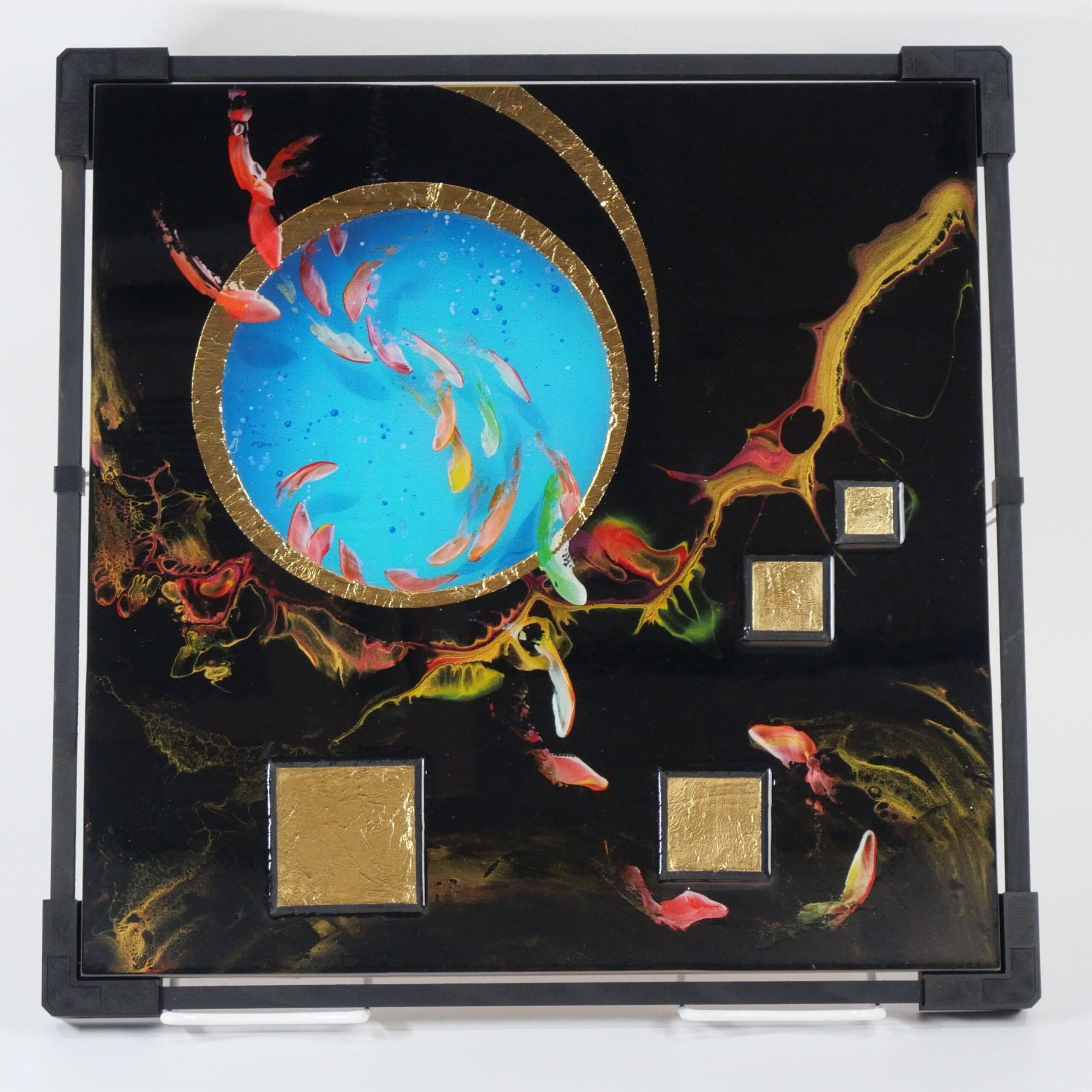
Japanese home gardens often feature a “water lily pot,” a round ceramic basin about 50 centimeters in diameter. Water is stored in it to create a small biotope. On clear nights, the moon reflects in it, creating a space of profound wabi-sabi charm. When fish strike the surface from below, the moon shimmers, and their scales faintly sparkle. This beautiful world requires almost no maintenance to sustain itself; the ecosystem cycles through the interplay of light, plants, and living creatures. Digressing slightly, Japan's Edo period was one of national isolation, yet despite having no external exchanges whatsoever, the cycle of daily life remained self-contained and cyclical within it. For over 300 years, the Japanese have known and practiced the concept of “knowing when enough is enough.” This stands as an antithesis to modern society, which mindlessly produces, consumes, and discards things driven solely by desire.
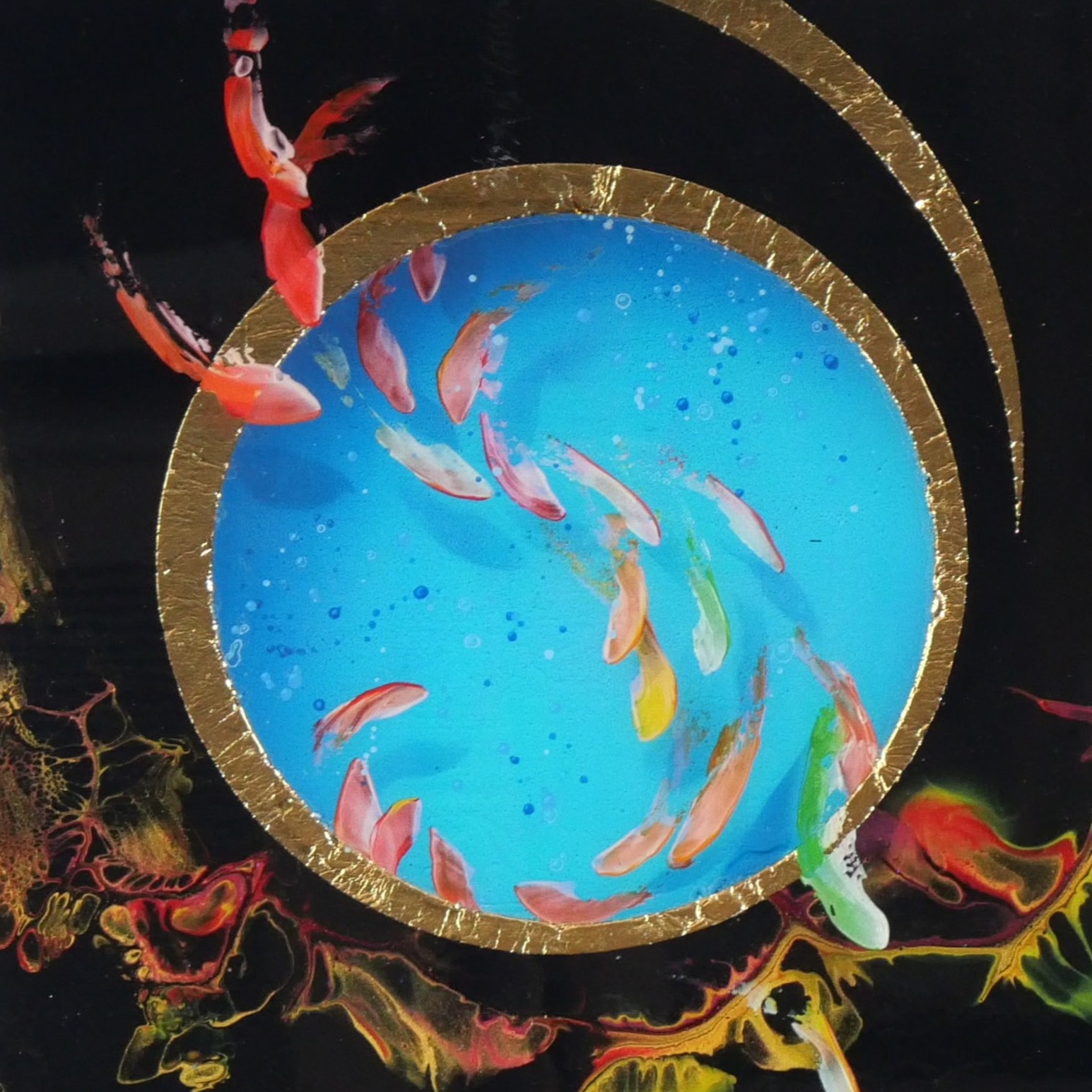
Golden Scales and Water Moon Size S6 (410×410) Materials: Acrylic paint (painted on panel), metal foil, resin (framed)
¥99,000(including tax)
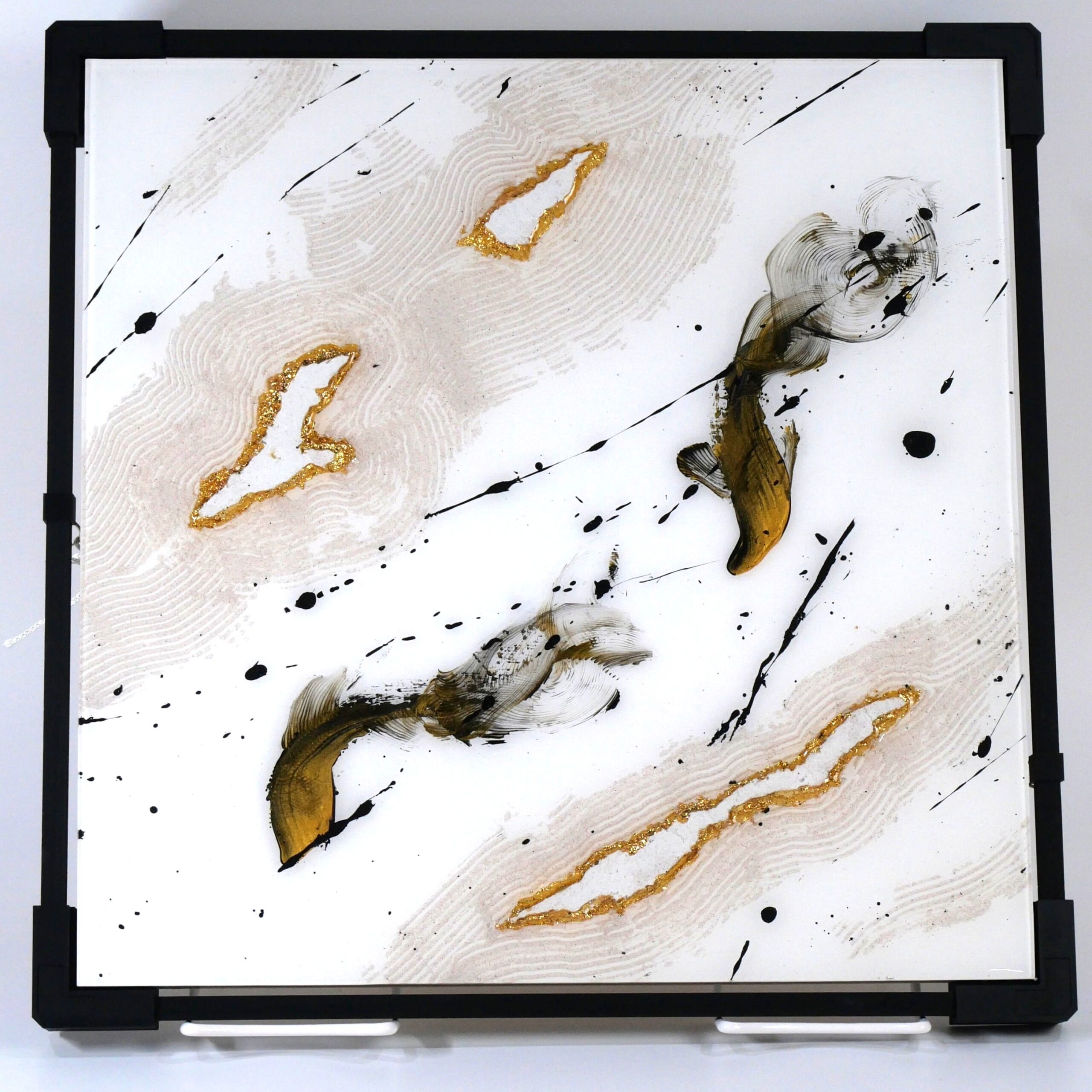
Karesansui is a form of Japanese garden that depicts the flow of a river using only stones and sand, without water. Japanese gardens possess a uniqueness not found in gardens of other countries, and among them, karesansui is a particularly distinctive form. This work reconstructs karesansui and the pair of river fish that might inhabit it in a pictorial form.
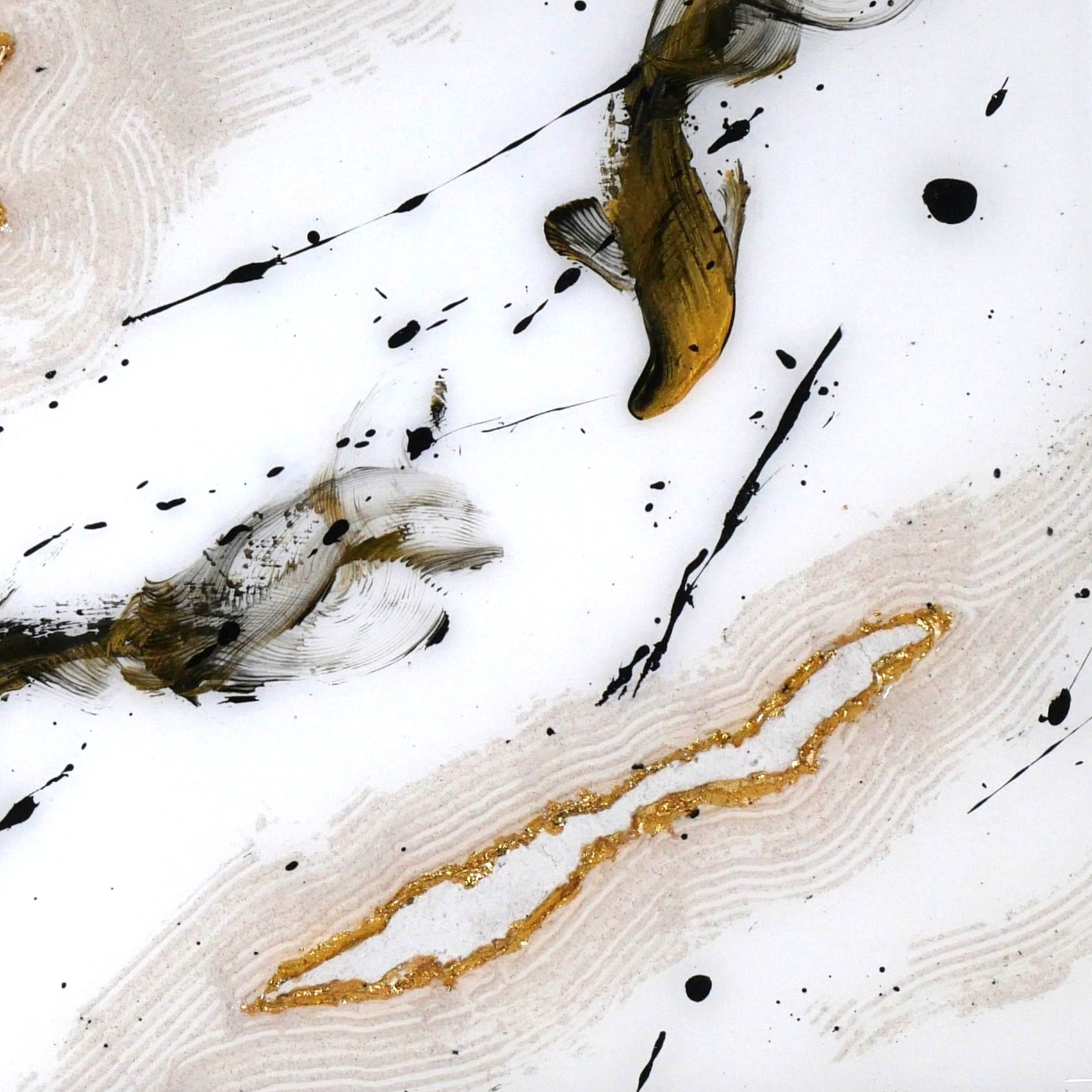
Karesansui Stream Size S6 (410×410) Material: Mixed media (acrylic, modeling paste, metal foil, wood panel) (framed)
¥99,000(including tax)
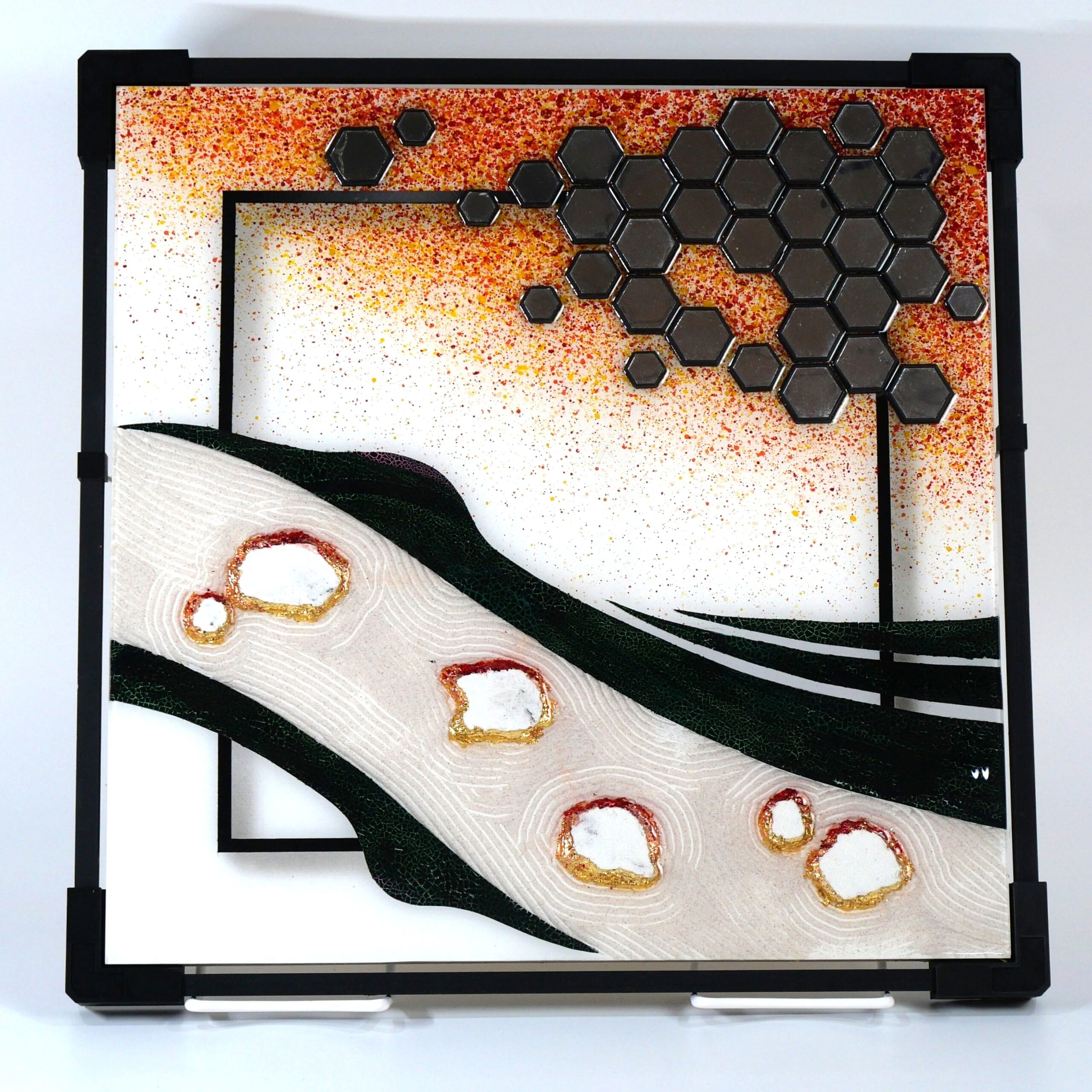
This work uniquely interprets its own worldview and beauty, reconstructing them on canvas. The mirrors used in the piece particularly express the element of “borrowed scenery” from Japanese gardens. Borrowed scenery refers to the concept of incorporating landscapes outside the garden as elements within it. The mirrors infinitely transform depending on where the painting is displayed, never representing a fixed element. This signifies the work's “eternal change.” Furthermore, by reflecting the landscape, the mirror fluidly blurs the boundaries between the viewer's “outside” and “inside” within the work's world, reminding us that this world is perpetually in motion.
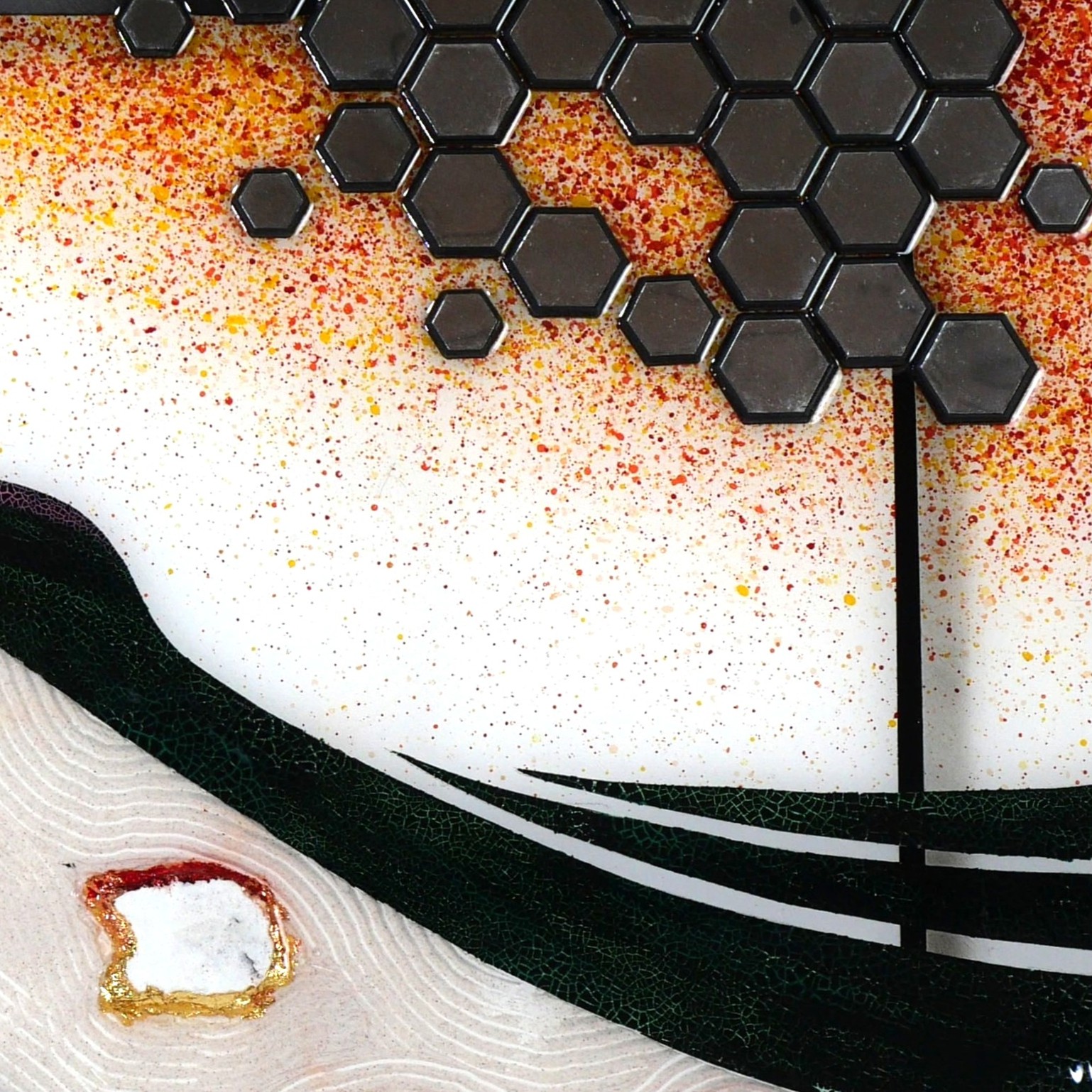
Tsuru-no-Niwa Size S6 (410×410) Material: Mixed media (acrylic, modeling paste, metal foil, PVC mirror on wooden panel) (framed)
¥99,000(including tax)
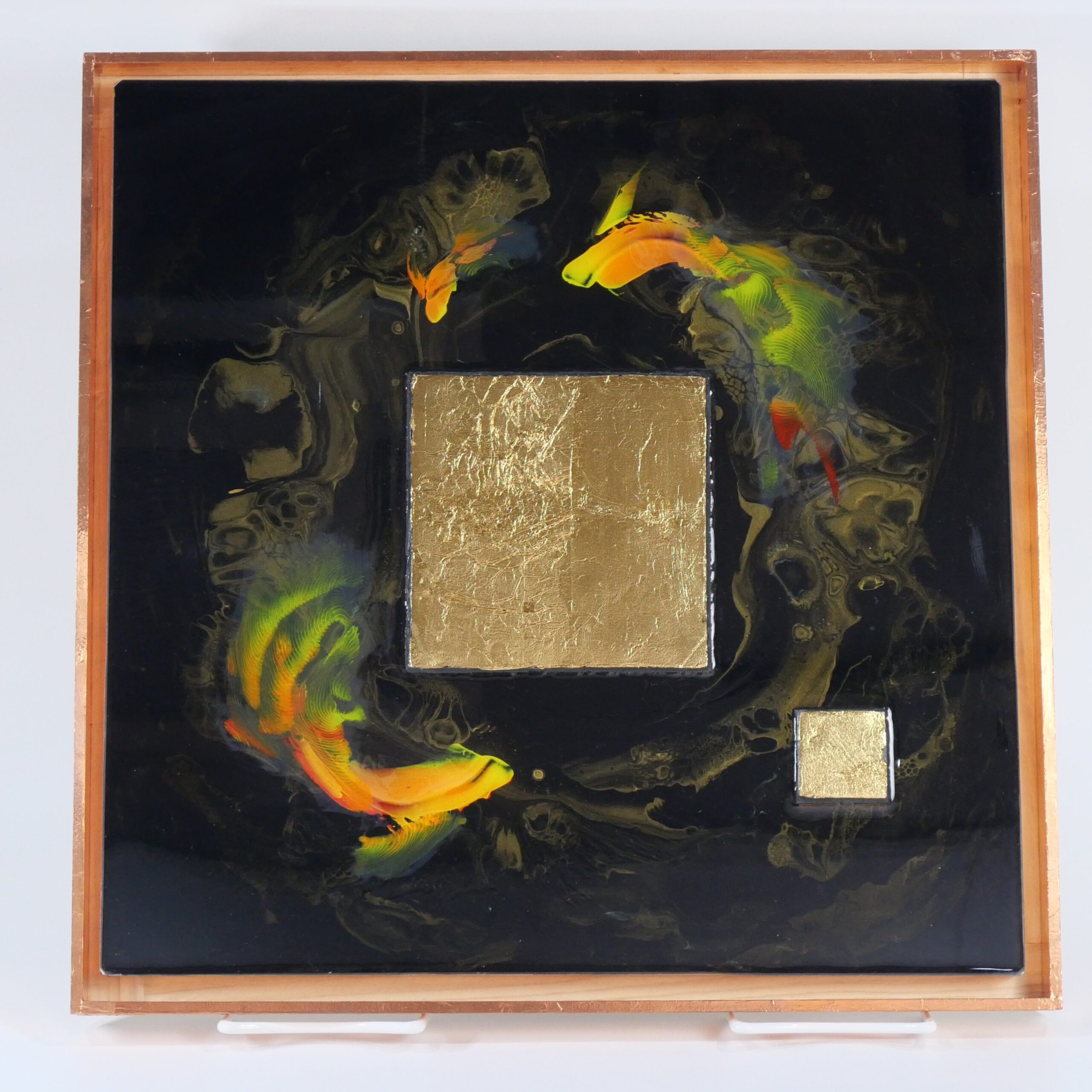
Acrylic, modeling paste, gold leaf, and resin on plywood panel The rectangular gold leaf symbolizes moss-covered rocks, with three goldfish swimming around them. The golden patterns in the background evoke flowing water, but also incorporate subtle ripples on the surface.
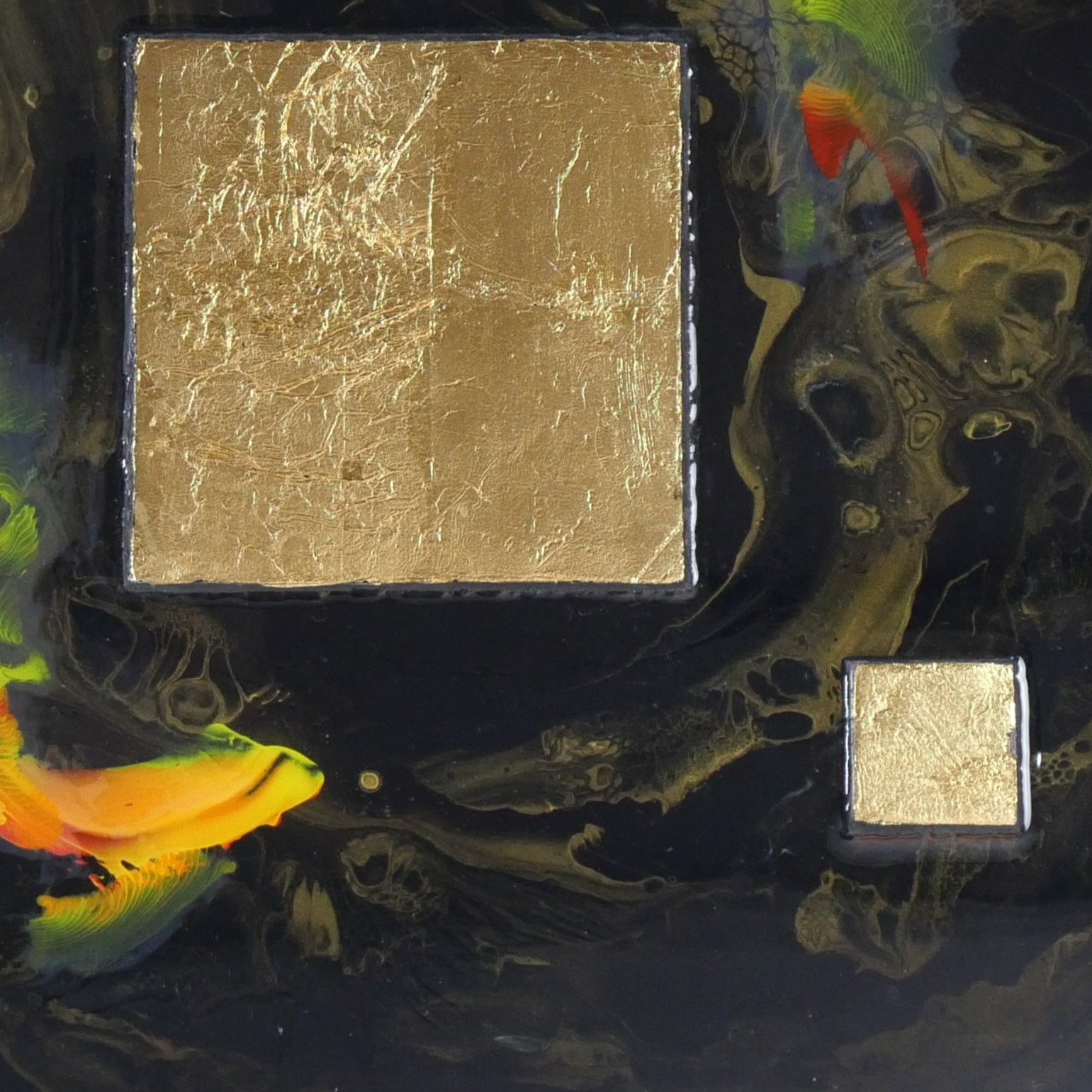
Yuran Size S6 (410×410) Material: Acrylic, modeling paste, gold leaf, resin on plywood panel (framed)
¥88,000(including tax)
Exhibition Title
First Art, First Life
Date
April 1-25, 2026
Time
11:00-19:00
Location
Gallery An Nihonbashi
12-4 Nihonbashi Odenmacho, Chuo-ku, Tokyo 103-0011
Refolia 5F Gallery An
【Access】
4-min walk from Higashi-Nihonbashi Station Exit A2
5-min walk from Kodenmacho Station Exit 1
4-min walk from Bakuro-Yokoyama Station Exit A2